Two IELTS coaching centres in Farmgate run admission ads at the same time. One shows a stock photo of smiling students and “Admission going on! Limited seats!” The other shows a 60-second video of its lead teacher explaining a common speaking mistake, followed by “Join a free demo class this Friday.” Guess which one fills its batch first.
Coaching centre marketing in Bangladesh works when you let people experience your teaching before they pay. This guide covers the full plan: content, demo classes, ads, proof and follow-up.
How students and parents decide
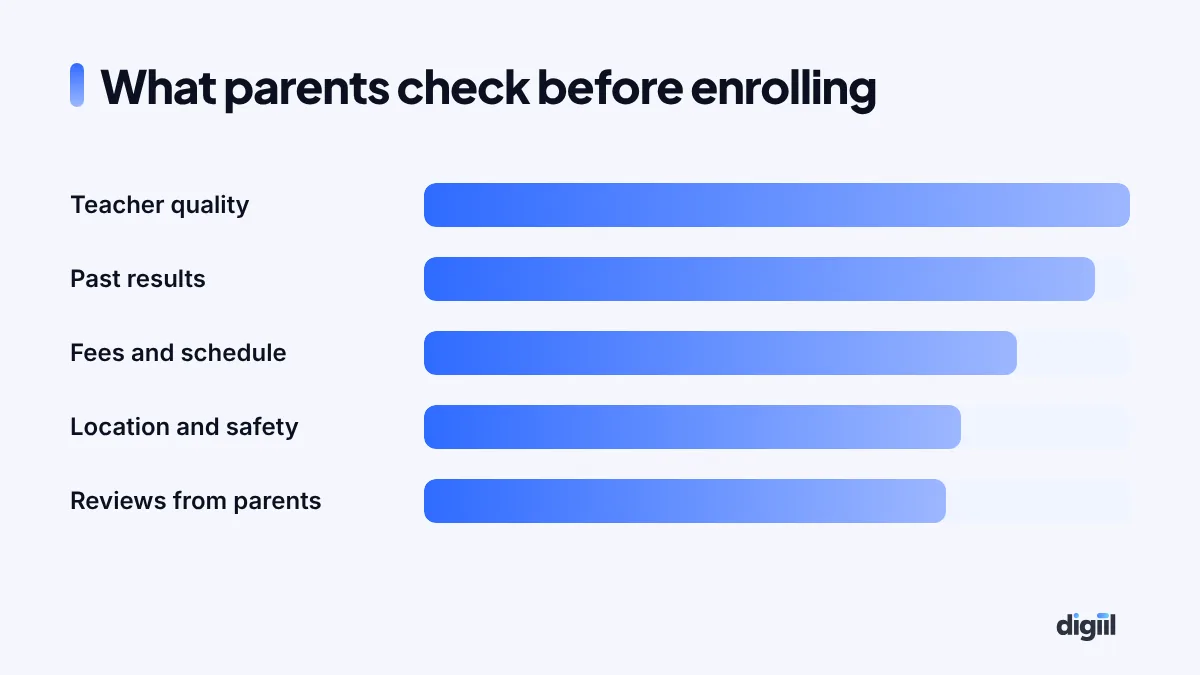
Education is a trust purchase. Parents worry about wasting money and time. Students want to know if the teacher is good and if friends liked it. Your marketing must answer these worries directly.
1. Plan around admission seasons
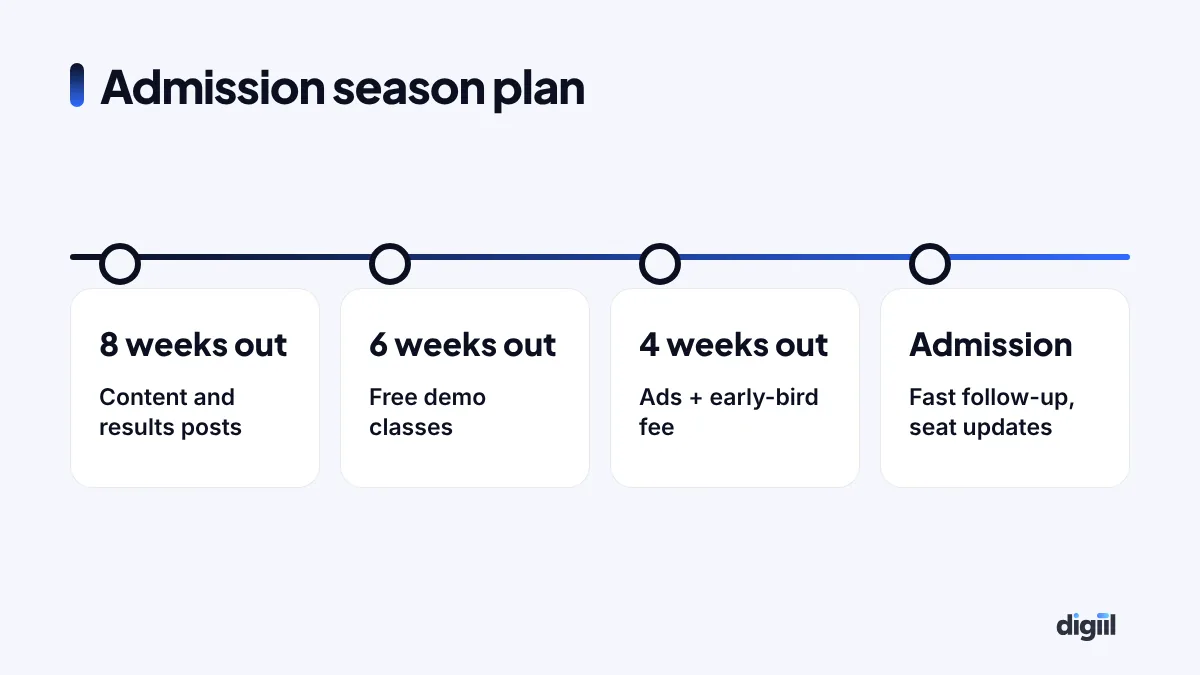
Most demand comes in waves: after SSC and HSC results, before university admission tests, before IELTS test dates, at the start of the school year. Plan content and ads to peak when demand peaks, and start warming up your audience weeks earlier.
2. Teach in public
The best marketing for a teacher is teaching. Post:
- Short lessons and exam tips as Reels, TikToks and YouTube Shorts.
- Longer YouTube classes on difficult topics.
- Live Q&A sessions before exams.
- Common mistakes and how to fix them.
Students who learn from your free content already trust you before they enrol.
3. Run free demo classes
- Offer a real class, not a sales pitch.
- Collect names and phone numbers when people register.
- Follow up the same day with fees, schedule and an early-bird offer.
- Run demos online too, for students outside your city.
4. Show real results, honestly
Share results with student and parent permission: scores, admissions, short video testimonials. Avoid guarantees and exaggerated claims. Honest results build long-term reputation; inflated claims destroy it.
5. Use ads that point to experience
- Promote demo classes and free resources, not just “admission open”.
- Use teacher videos as ad creative.
- Target by location for physical centres, and wider for online courses.
- Retarget people who watched your videos or visited your site.
- Use Google search ads for “IELTS coaching Mirpur” style searches.
Our Boost vs Ads Manager guide helps you choose the right campaign type.
6. Make information easy to find
Every course should have a clear page with schedule, fees, duration, teacher profiles, location, batch size and how to enrol. Hidden fees and vague schedules create endless calls and lost students.
7. Follow up fast
Admission enquiries go cold quickly. Reply within minutes on Messenger and WhatsApp. Call demo class registrants the same day. Use saved replies for fees and schedules, and an AI assistant for nights. Read our AI tools guide.
8. Turn students into ambassadors
- Referral discounts for friends who join.
- Google reviews from parents and students.
- Alumni stories and success posts.
- WhatsApp groups for current students with useful updates.
Measure the right numbers
| Metric | Why it matters |
|---|---|
| Demo class registrations | Interest you can follow up |
| Demo attendance rate | Quality of registrations |
| Demo to enrolment rate | Teaching and offer strength |
| Cost per enrolment | True marketing efficiency |
| Referral enrolments | Student satisfaction |
Common mistakes
- Only posting “admission going on” with stock photos.
- Hiding fees until people visit.
- No follow-up after demo classes.
- Exaggerated result claims.
- Starting ads a week before the batch starts.
Online courses: marketing beyond your city
Online classes let you teach students anywhere in Bangladesh and abroad. Marketing changes a little:
- Target the whole country, or Bangladeshis abroad for language and skill courses.
- Offer recorded sample lessons so people can test your teaching anytime.
- Show how classes work: live or recorded, app or Zoom, support groups, exams.
- Accept easy payments: bKash, Nagad, cards.
- Collect video reviews from students in different districts.
If you sell to students abroad, a course platform handles video hosting, dollar payments and certificates. Teachable and Thinkific both changed their entry plans in 2026, so check what the cheapest usable plan costs today. This Teachable vs Thinkific price comparison lays it out plan by plan.
Parents and students need different messages
| Audience | What they care about | Message focus |
|---|---|---|
| Students | Good teachers, friends, results, fun | Teacher videos, student stories, class vibe |
| Parents | Safety, discipline, results, value | Results, schedules, progress reports, fees |
Create content for both. Parents often pay; students often decide.
A simple follow-up script for enquiries
- Thank them and ask which course and exam they are preparing for.
- Share the schedule, fees and next demo class date.
- Send a short teacher video or sample lesson.
- Invite them to the demo and confirm the day before.
- After the demo, ask what they thought and offer the early-bird fee.
Saved replies make this fast, and an AI assistant can handle common questions outside office hours.
Keep students, not just enrol them
Retention matters in education too. Students who feel progress stay longer and refer friends. Share progress reports with parents, celebrate small wins, collect feedback mid-course, and offer advanced batches for students who finish. Our customer retention guide has ideas that apply here too.
The admission calendar: when to do what
Education marketing in Bangladesh follows the academic year. Plan campaigns backward from your intake dates.
| Period | What families are doing | What you should do |
|---|---|---|
| 3–4 months before intake | Researching options quietly | Helpful content, SEO pages, YouTube videos, open-day announcements |
| 2 months before | Shortlisting and comparing | Demo classes, comparison guides, testimonials, ads to warm audiences |
| Last 4–6 weeks | Deciding and applying | Remarketing, deadline reminders, fast phone and WhatsApp follow-up |
| After intake | Settling in | Welcome content, referral programme, collect reviews |
Exam results, such as SSC and HSC, are big moments. Prepare content and offers before results come out, not after.
A sample monthly budget for a coaching centre
Here is how a mid-sized coaching centre might split its monthly marketing spend during admission season. Adjust it to your size and goals.
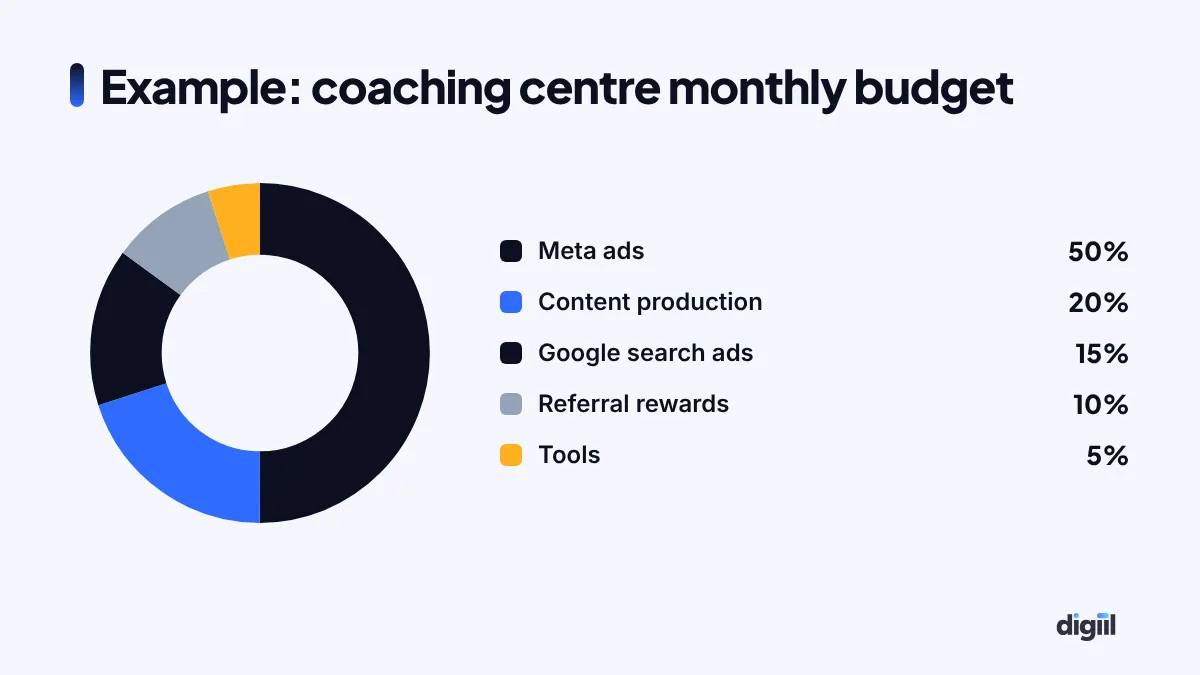
- Facebook and Instagram ads: the largest share, mostly to promote free demo classes.
- Content production: class clips, teacher videos, result stories.
- Google search ads: for high-intent searches like “IELTS coaching Mirpur”.
- Referral rewards: small rewards for students who bring friends.
- Tools: WhatsApp Business, a simple CRM or sheet, scheduling tools.
The Farmgate centre that taught in public
The second IELTS centre posts a short speaking tip three times a week and runs a free demo every Friday. Every registrant gets a call the same evening. Most of its new students now say they “watched your videos for months” before joining. Its ad budget is smaller than its competitor’s, and its batches fill faster.
Coaching centre marketing in Bangladesh is about showing your teaching, proving results honestly and following up fast. If you want help planning your admission season, see our paid ads and social media services.
- Plan marketing around admission and exam seasons.
- Teach in public with short lessons and tips.
- Use free demo classes to let students experience your teaching.
- Show real results honestly and make fees and schedules clear.
- Follow up every enquiry the same day.
FAQs
When should coaching centres start marketing for admissions?
About eight weeks before the batch starts, with content first, then demo classes and ads closer to admission.
Do free demo classes work?
Yes. A good demo class lets students and parents experience the teaching, which is more convincing than any ad.
How can I prove results without exaggerating?
Share real results with student permission, show numbers clearly and honestly, and avoid "100% guarantee" claims.
Is YouTube useful for coaching centres?
Very. Short lessons and exam tips in Bangla build trust and bring students who already like your teaching style.

Amanat has managed $4M+ in Google and Meta ad spend for brands in the UK, USA, Australia and Bangladesh since 2020. He holds 20+ certifications, including Digital Marketing Strategy from Harvard Business School Online. More about Amanat