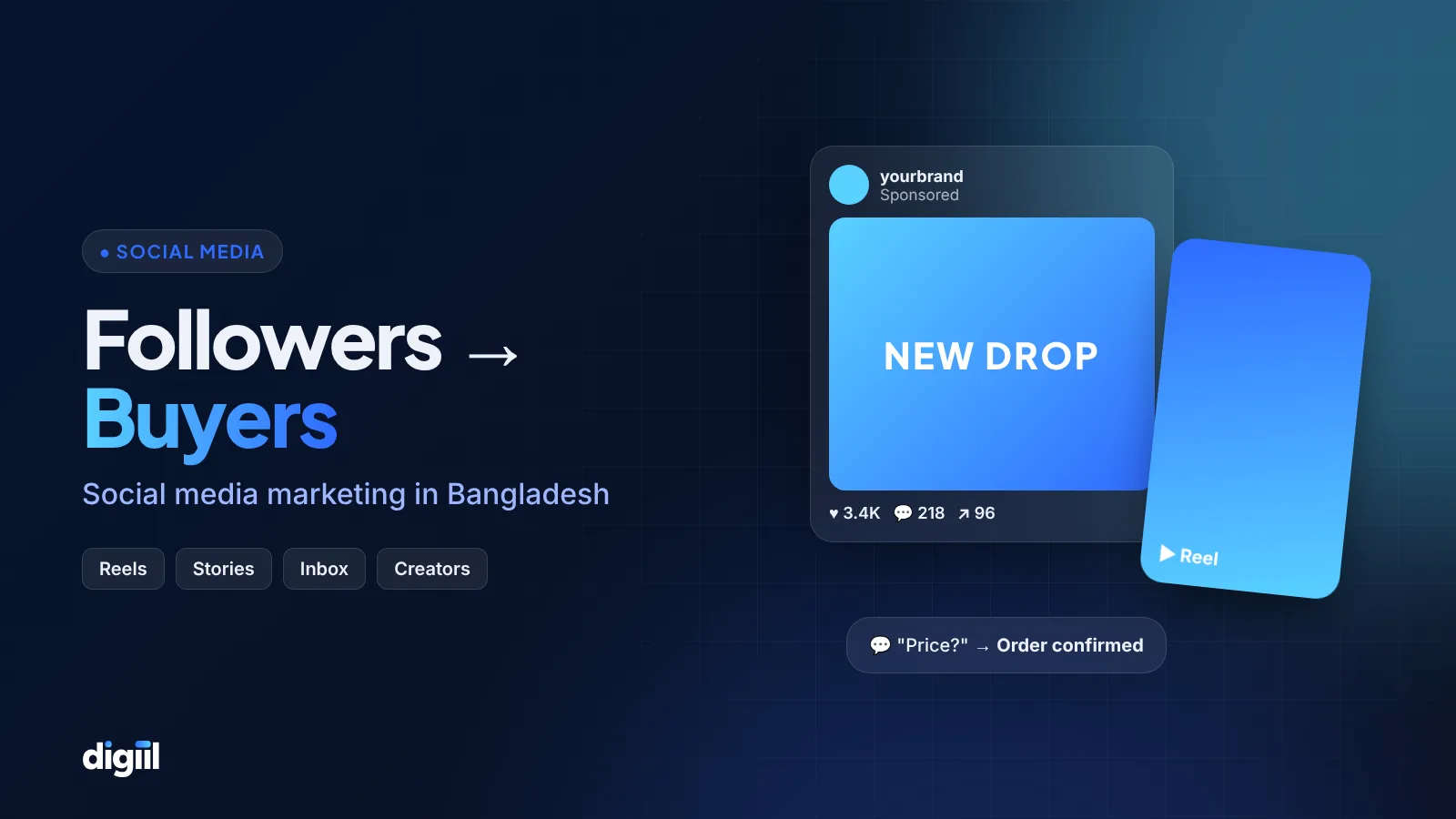
A home décor page in Chattogram had 85,000 followers and was losing money. The owner posted every day, ran contests, and celebrated every 1,000 new likes. But sales were flat. When we looked at the inbox, we found the reason: hundreds of messages asking “price?” with replies arriving the next day, if at all. The followers were there. The selling was not.
Social media marketing in Bangladesh is not about followers. It is about turning attention into trust, and trust into orders. This playbook shows you how, step by step, with the platforms, content, schedule and numbers that actually matter.
Why social media is still king in Bangladesh
Bangladesh had about 77 million Facebook users in October 2026, according to NapoleonCat, with the biggest group aged 18 to 24. Many people discover products in their feed, ask questions in Messenger and pay through bKash or cash on delivery. For a lot of small businesses, social media is the shop, the ad and the customer service desk all at once.
But competition is high. Organic reach for business pages is limited, and people scroll fast. The brands that win do a few things very well.
Step 1: Pick the right platforms
| Platform | Best for | Content that works |
|---|---|---|
| Reach, community, Messenger sales | Reels, offers, groups, Lives | |
| Lifestyle, fashion, beauty, food | Reels, carousels, stories | |
| TikTok | Discovery, younger buyers | Native, lo-fi, creator-led video |
| YouTube | Reviews, tutorials, trust | Long videos and Shorts |
| B2B, hiring, founders | Insights, case studies, team stories |
Do not try to be everywhere. Start with one or two platforms where your customers are, and do them well.
Step 2: Define your content pillars
Content pillars are three to five themes you post about again and again. They keep you consistent and stop you from posting random things. Examples for a skincare brand:
- Results: real customer before-and-after stories, honestly told.
- Education: ingredients, routines, skin types.
- Product: new launches, bundles and offers.
- Behind the scenes: making, packing, the team.
- Community: customer photos, questions, polls.
Every post should fit a pillar, and every pillar should support a sale, directly or indirectly.
Step 3: Make short video your main format
Reels, TikToks and Shorts drive most discovery now. The first two seconds decide whether someone watches. Strong hooks include:
- A clear problem: “Your Eid outfit wrinkles by noon?”
- A surprising result or number.
- A real person in action, not a slow logo intro.
- Bold text on screen that says the benefit.
Most people watch without sound, so add captions. Phone-shot videos with real people often beat expensive studio ads. Use both, and let the numbers decide.
Step 4: Plan a weekly schedule
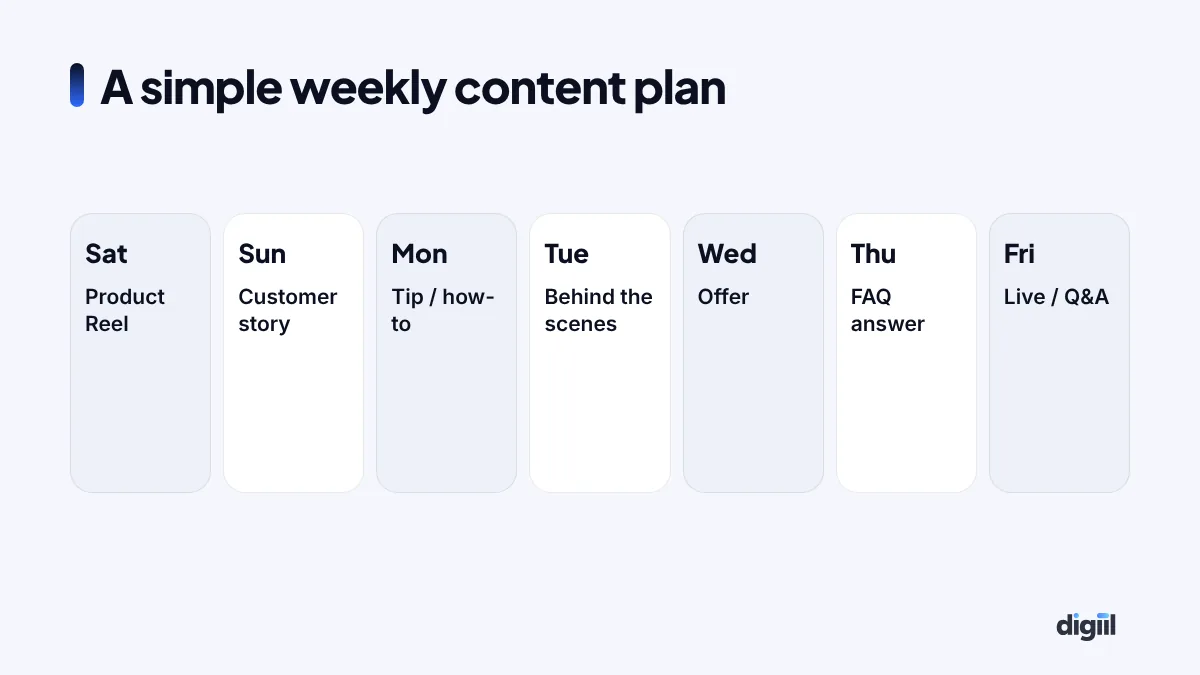
A simple weekly plan stops the “what should I post today?” stress. Batch-create content once a week, schedule it with Meta Business Suite, and keep a few extra posts ready for busy days.
Step 5: Turn the inbox into a sales desk
This is where most Bangladeshi businesses lose money. People message “price?” and wait. If nobody replies within minutes, they buy elsewhere.
- Set a reply time goal, for example 15 minutes during business hours.
- Use saved replies for common questions: price, size, delivery, payment.
- Put the price in the post when you can. Hiding prices creates extra work and annoys buyers.
- Use an AI agent for nights and busy times. It can answer common questions and take orders in Bangla and English. See our AI agents service.
- Reply to comments too. Public replies show other people you are active.
Step 6: Boost the winners with ads
Organic posts tell you what people like. Ads help those posts reach more of the right people. The smart workflow:
- Post regularly and watch saves, shares, comments and messages.
- Pick the top two or three posts each week.
- Run them as ads in Ads Manager with a clear goal: messages, leads or sales.
- Keep the ones that bring orders at a good cost, and refresh the rest.
This keeps your ad creative fresh and proven. Our guide on Facebook ads cost in Bangladesh explains budgets.
Step 7: Work with creators and customers
People trust other people more than brands. Invite happy customers to share photos and videos, and repost them with permission. Work with micro-creators whose audience matches yours. Our influencer marketing guide covers how to choose and track them.
Step 8: Use Facebook groups wisely
Groups are huge in Bangladesh: mothers’ groups, foodie groups, tech groups, local area groups. Do not spam them with ads. Instead:
- Answer questions helpfully and mention your business only when relevant.
- Partner with group admins for approved promotions.
- Start your own group around your topic if you can keep it active.
Step 9: Measure what matters
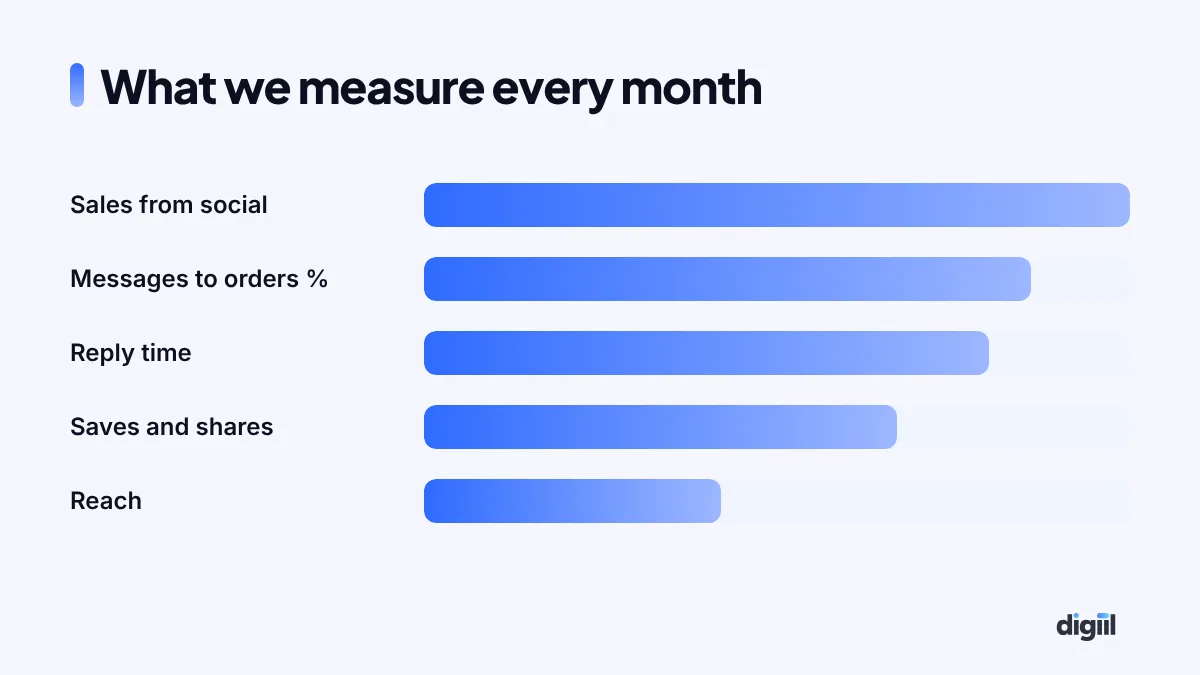
Check these numbers every month:
- Sales and leads from social, tracked with codes, links or a simple “how did you find us?” question.
- Message-to-order rate: how many conversations become orders.
- Reply time.
- Saves and shares, which show content people value.
- Reach and followers, useful, but less important than the above.
Plan around Bangladesh’s big selling seasons
Social media in Bangladesh follows the calendar. Sales jump around Eid-ul-Fitr, Eid-ul-Adha, Pohela Boishakh, Puja, winter weddings, Valentine’s Day and the start of the school year. Smart brands plan four to six weeks ahead.
| Season | What people buy | Start content |
|---|---|---|
| Ramadan and Eid-ul-Fitr | Clothes, gifts, food, home décor | 3–4 weeks before Ramadan |
| Eid-ul-Adha | Kitchen items, spices, freezers, clothes | 3 weeks before |
| Pohela Boishakh | Red and white clothes, jewellery, food | 3 weeks before |
| Winter and weddings | Shawls, gifts, beauty, event services | Early November |
| School and admission season | Books, bags, gadgets, coaching | 4 weeks before |
Before each season, prepare your offers, delivery cut-off dates, stock and ad creative. Tell people the last date for delivery before Eid. That one post saves you a lot of angry messages later.
Sell live on Facebook
Facebook Live selling is a big part of how many Bangladeshi pages sell clothes, jewellery and cosmetics. Done well, it builds trust fast because people see the real product, in real light, with a real person.
- Set a schedule like “every Friday at 9 pm” so people come back.
- Show each item up close, say the price, size and stock clearly.
- Use a simple order code, for example “comment the item number + your area”.
- Have a second person answering comments and confirming orders.
- Confirm every order by phone or message before you ship, to cut fake orders. Our guide to reducing fake COD orders shows how.
Handle negative comments the right way
Every page gets complaints. How you handle them in public decides what thousands of silent readers think of you.
- Reply fast and politely, even if the person is rude.
- Move details to private messages with a short public note: “Sorry about this. We have sent you a message to fix it.”
- Fix the problem, then ask the customer to update their comment if they are happy.
- Do not delete honest complaints. People notice, and it hurts trust more than the complaint.
- Hide only spam, abuse or scam links.
A complaint handled well often turns into a loyal customer. It also shows new visitors that a real team stands behind the page.
Tools and team: what you really need
You do not need expensive software to start. A simple, practical stack:
- Meta Business Suite for scheduling posts, stories and the shared inbox.
- Canva or CapCut for quick graphics and video edits.
- A phone with a good camera and a cheap ring light.
- A Google Sheet for your content calendar and monthly numbers.
- An AI chat assistant for night-time replies, once volume grows.
For a small business, one person can plan and post if they batch the work. As you grow, split the jobs: one person creates content, another handles the inbox and orders. The inbox job matters most, because that is where money is made or lost.
Organic vs paid: how to split your effort
A simple rule we use with clients: spend about 70% of your social time on content and replies, and put most of your money behind the 20% of posts that are already working. Organic posting is your testing lab. Ads are the megaphone. Without good organic content, ads get expensive. Without ads, good content reaches too few people.
Common mistakes
- Chasing followers with giveaways that attract the wrong people.
- Posting only product photos with prices.
- Hiding prices and forcing everyone to message.
- Slow or rude replies.
- Copying competitors’ content instead of finding your own voice.
- Ignoring negative comments instead of handling them politely.
- Stopping after a few weeks because “it does not work”.
Rules to remember
Platforms have rules on health claims, finance, weight loss and before-and-after images. Breaking them can get posts removed or ad accounts restricted. If you sell online, the Digital Commerce Operation Guidelines also ask for clear product details, prices and delivery terms. Honest content keeps you safe and builds trust.
Turn one video into a week of posts
Making new content every day is what burns most small teams out. The fix is to plan one strong piece and cut it into many. Here is how one 3 to 5 minute video, for example a product demo or a founder talking about how something is made, becomes a full week:
| Day | Format | What to cut |
|---|---|---|
| Saturday | Reel / TikTok (20–30 s) | The single best moment, with a strong first line on screen |
| Sunday | Carousel | Five key points from the video as slides |
| Monday | Story with poll | A question the video raises: “Which colour would you pick?” |
| Tuesday | Second short clip | A different angle: behind the scenes or a customer reaction |
| Wednesday | Text post or quote card | One sentence from the video that people will agree with |
| Thursday | Full video on the page and YouTube | The complete version for people who want detail |
| Friday | Customer proof | A review or unboxing that matches the week’s topic |
Film once, edit in one sitting, schedule everything in Meta Business Suite. The posts that perform best that week tell you which moment to turn into an ad.
What changed for the décor page
We did not chase more followers. We set a 15-minute reply goal and added saved replies. We put prices in every post. We started three Reels a week showing products in real homes, made by customers and the team. We boosted only the top Reels each week. In three months, the page’s sales from social more than doubled, with fewer posts than before.
Social media marketing in Bangladesh works when you treat it as a sales system, not a popularity contest. If you want a team to plan, create and manage it, see our social media service.
- Choose one or two platforms where your customers are, and do them well.
- Use 3 to 5 content pillars and make short video your main format.
- Reply fast. The inbox is where most sales happen.
- Boost proven organic winners with ads.
- Measure sales, message-to-order rate and reply time, not just followers.
Questions people also ask
Which social media platform is best for business in Bangladesh?
Facebook still reaches the most people. Instagram works well for lifestyle and premium brands. TikTok is strong for discovery among younger buyers. LinkedIn suits B2B. Choose based on where your customers spend time.
How often should a business post on social media?
For most small businesses, three to five good posts a week plus daily stories is enough. Consistency matters more than volume.
Do I need to pay for ads, or is organic enough?
Organic reach is limited. Most businesses grow fastest by posting regularly, finding which posts people love, and then putting a small ad budget behind those winners.
How much does social media management cost in Bangladesh?
It depends on the number of platforms, posts, videos and whether shoots are included. Freelancers cost less; agencies include strategy, design, video and reporting.
How do I measure social media success?
Track sales and leads from social, how many messages turn into orders, reply time, and saves and shares. Followers and likes alone do not show business results.

Amanat has managed $4M+ in Google and Meta ad spend for brands in the UK, USA, Australia and Bangladesh since 2020. He holds 20+ certifications, including Digital Marketing Strategy from Harvard Business School Online. More about Amanat