Sakib watched a YouTube video promising “Tk 1 lakh a month with dropshipping, no investment.” He signed up with a reseller platform, picked 20 products and boosted posts. In his first month he had 64 orders, 19 returns, two angry customers who received broken items, and a loss after ad costs. The video was not exactly lying. It just left out everything important.
Dropshipping in Bangladesh can work. Some people build real businesses this way. But it is not easy money. This guide explains how it really works, the true costs and the mistakes that sink most beginners.
What dropshipping means
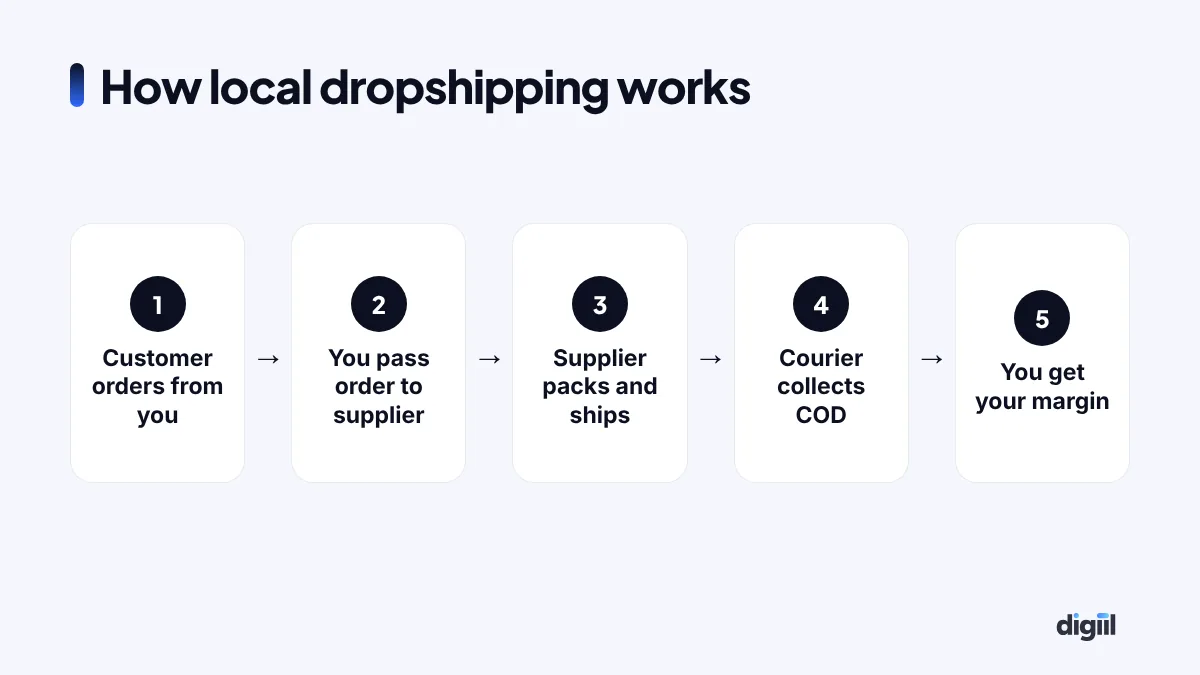
In dropshipping, you sell products you do not keep in stock. When a customer orders, a supplier packs and ships the product. You earn the difference between your selling price and the supplier price, minus your costs.
Two kinds of dropshipping
Local reselling and dropshipping
You sell to Bangladeshi customers, usually through a Facebook page or simple website. Suppliers or reseller platforms in Bangladesh ship the product with your order details, often by cash on delivery. This is the most common model here.
International dropshipping
You sell to buyers in other countries, often through Shopify, with suppliers abroad. It needs international payment and payout setups, strong ad skills and patience. Competition is very high.
The real costs
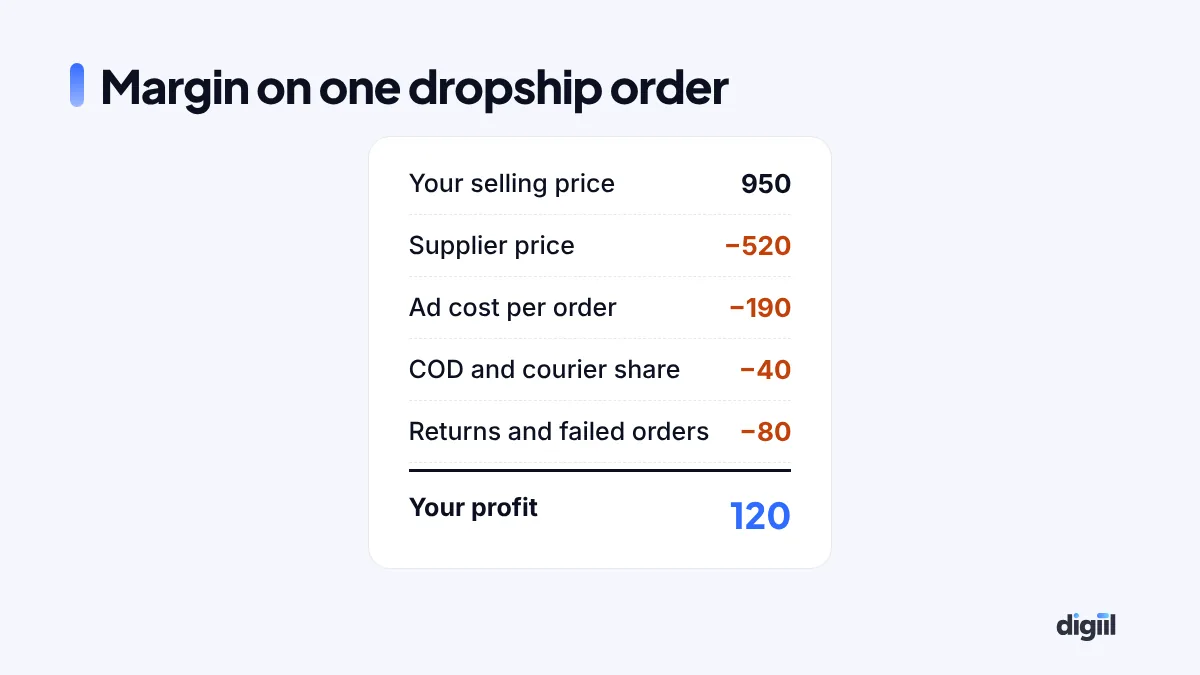
In this example, an order that looks like Tk 430 margin becomes Tk 120 profit. If returns rise or ads get expensive, it becomes a loss. Always calculate your real profit per order before scaling.
Choosing suppliers
- Order samples yourself. Check quality, packaging and delivery time.
- Ask about returns: who pays when a product is damaged or wrong?
- Check stock reliability. Nothing kills trust like “sorry, out of stock” after an order.
- Check how fast they ship and which couriers they use.
- Avoid fake branded goods. They break the law and platform rules.
Picking products that can work
Good dropship products in Bangladesh are often:
- Light, small and hard to break.
- Not easily found in the local market at the same price.
- Easy to show in a short video.
- Priced high enough that margin survives ads and returns.
Avoid very cheap items where one return wipes out several profits, and avoid products with size issues unless you have a clear size guide.
COD risk and how to manage it
Cash on delivery drives most sales, but also most losses. Reduce risk by:
- Confirming every order by phone or WhatsApp.
- Taking the delivery charge in advance for outside Dhaka or risky orders.
- Tracking customers who refuse parcels.
- Showing clear photos, sizes and prices to avoid “not as expected” returns.
Our full guide on reducing fake COD orders has more.
Your brand still matters
Customers do not know or care that you use a supplier. If the product is late or broken, they blame you. Handle complaints fast, keep promises realistic and build a page that looks trustworthy. Our f-commerce guide shows how.
Legal and practical basics
- Get a trade licence once you sell regularly.
- Follow the Digital Commerce Operation Guidelines on product details, delivery and refunds.
- Keep simple records of sales, costs and profit.
- Do not sell restricted or fake products.
Dropshipping vs keeping your own stock
| Dropshipping | Own stock | |
|---|---|---|
| Upfront money | Low | Higher |
| Margin | Lower | Higher |
| Quality control | Depends on supplier | In your hands |
| Delivery speed | Depends on supplier | You control |
| Branding and packaging | Limited | Full |
Many successful sellers start with dropshipping to test demand, then buy stock of proven winners to improve margin and quality.
A safer way to start
- Pick 3–5 products and order samples.
- Calculate profit per order after ads, courier and returns.
- Run small tests with short videos.
- Confirm every order and track returns by area.
- Keep only products that make real profit. Stock the best ones yourself.
Where dropshippers find customers
Because your margins are thinner than brands holding stock, customer acquisition must be efficient:
- Short videos showing the product solving a problem, used as Reels and TikToks.
- Click-to-Messenger or WhatsApp ads for products people want to ask about.
- Micro-creators paid with product plus a small fee.
- Facebook groups where your audience already asks for recommendations, following group rules.
- Retargeting people who watched or messaged but did not order.
Track cost per delivered order, not per message. Many dropshippers think a product is profitable until they count failed deliveries.
Customer service when you do not hold the stock
Since you rely on a supplier, set up clear processes:
- Agree on dispatch times in writing.
- Get tracking numbers for every parcel and share them with customers.
- Have a plan for wrong or damaged items: who replaces, who pays delivery.
- Keep a few units of your best sellers in hand for fast replacements.
- Respond to complaints within hours, not days.
Signs it is time to stop dropshipping a product
- Return rate keeps rising even after better confirmation.
- Supplier quality becomes inconsistent.
- Competitors start selling the same item at lower prices.
- Ad cost per delivered order is higher than your margin for two weeks straight.
Cut losers quickly and put energy into the few products that actually make money.
From dropshipper to brand
The most successful sellers use dropshipping as a starting point. Once a product proves itself, they buy stock, add their own packaging and inserts, improve quality with the supplier, and build a brand name and website. Customers remember brands, not anonymous pages. Our guide to growing an f-commerce page into a brand explains the next steps.
Cash flow: when does the money actually arrive?
Profit on paper is not cash in your hand. With cash on delivery, money moves slowly, and that catches many new dropshippers out.
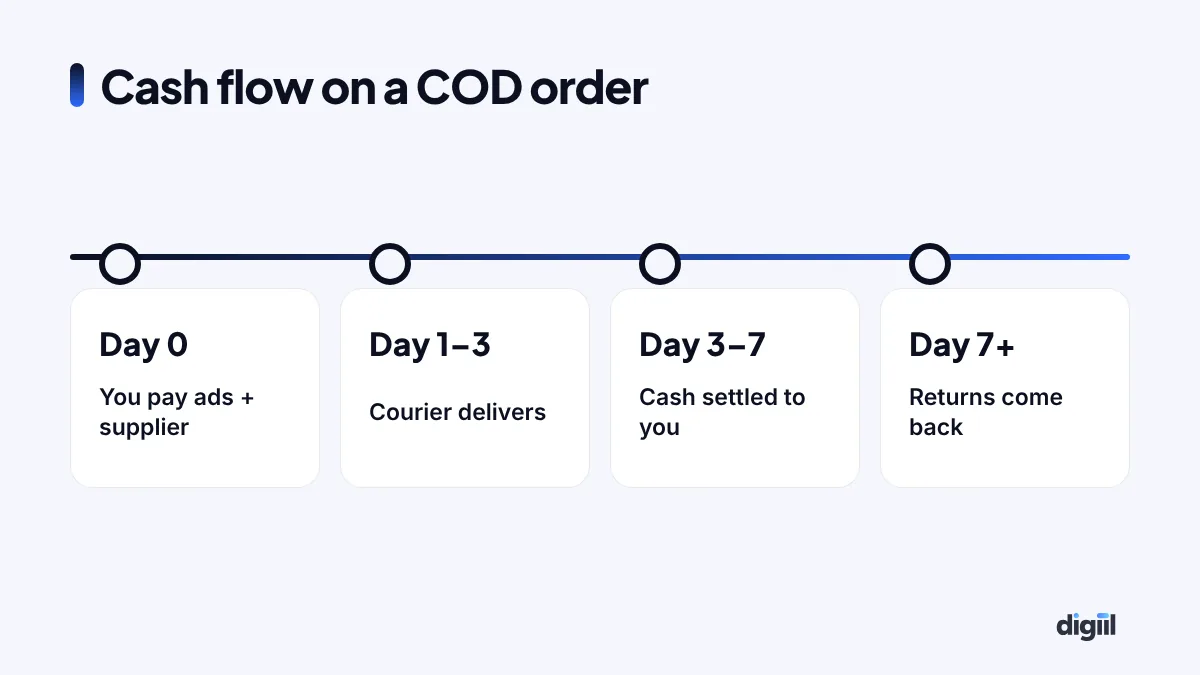
- Day 0: you pay for ads today. Many suppliers also want payment when they ship.
- Day 1–3: the courier picks up and delivers. Some parcels are refused.
- Day 3–7: the courier settles the cash it collected, minus its charges. Settlement timing depends on your courier and plan.
- Day 7+: refused parcels come back. You may owe the supplier for them unless you agreed otherwise.
So for about a week, you are paying for ads and products before customers’ cash reaches you. If you scale ads fast, that gap grows fast. Keep enough cash to cover at least two weeks of ad spend and supplier payments. Choose a courier with quick, reliable settlement. Our courier guide compares what to look for.
Three dropshipping models in Bangladesh
| Model | How it works | Main risk |
|---|---|---|
| Local wholesaler dropship | A Bangladeshi supplier packs and ships to your customer | Supplier stock runs out or quality changes |
| Reseller app or platform | You pick products from a platform and add your margin | Many sellers sell the same thing; price wars |
| Import pre-order | You take orders, then import in batches | Long delivery time, customs and currency risk |
Building a brand on top of dropshipping
If everyone sells the same product with the same photos, the cheapest seller wins. You need a reason for buyers to choose you.
- Your own photos and videos. Even phone videos of the real product beat stolen pictures.
- A niche. “Kitchen tools for small Dhaka flats” is easier to market than “everything”.
- Better service. Fast replies, clear delivery updates, easy exchanges.
- Bundles. Combine products into sets that others do not offer.
- Content. How-to videos and tips that show you know the products.
Calculate your margin before you list a product
Dropshipping margins look healthy on paper until you add delivery, returns and ads. The calculator below includes all three. If the break-even ad cost per order is lower than what ads usually cost in your niche, that product will lose money no matter how good the ads are.
For dropshipping, use the supplier price plus any fee they charge per order as the product cost, and add the supplier’s delivery charge if you pay it. Run this for every product before you spend a taka on ads.
What Sakib did next
Sakib dropped 17 of his 20 products. He kept three with better margins, ordered samples, made his own videos and started calling every customer before shipping. He took the delivery charge in advance outside Dhaka. His second month had fewer orders but a real profit. By the fourth month, he was buying stock of his best seller and adding his own packaging.
Dropshipping in Bangladesh is a tool for testing and starting, not a magic money machine. Know your numbers, choose suppliers carefully and protect your customers’ trust. When you are ready to grow with proper ads and a website, see our e-commerce starter guide.
- Dropshipping means selling without holding stock; the supplier ships.
- Real profit is much lower than the price gap once ads and returns are counted.
- Order samples and choose reliable suppliers.
- Manage COD risk with confirmations and advance delivery charges.
- Stock your proven winners to improve margin and quality.
Quick answers
Is dropshipping legal in Bangladesh?
Reselling products is legal, but you are still a seller. You should register your business, follow consumer protection and digital commerce rules, and avoid fake or restricted products.
Can I do international dropshipping from Bangladesh?
Some people sell to buyers abroad through platforms like Shopify, with suppliers in other countries. Payments, payouts and ad accounts need careful setup, and competition is high.
How much money do I need to start?
Less than buying stock, but you still need money for ads, a page or website and covering returns. Test with a small budget first.
What is the biggest risk in dropshipping?
Low margins combined with returns, fake COD orders and poor supplier quality. You get the customer complaints even when the supplier made the mistake.

Amanat has managed $4M+ in Google and Meta ad spend for brands in the UK, USA, Australia and Bangladesh since 2020. He holds 20+ certifications, including Digital Marketing Strategy from Harvard Business School Online. More about Amanat